
 Zero
Zero
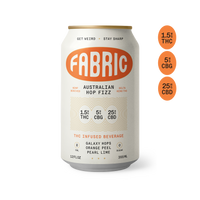 Rhythm
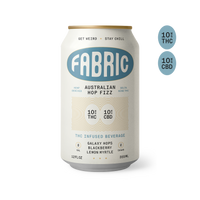 Downtime
 Afterhours
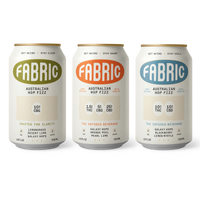 Anytime

“Is This Indica or Sativa?” Actually, It’s Complicated
This common question is basically the “chicken or beef” of the cannabis world.
For years, strain types have been shorthand for how you’re supposed to feel: sleepy vs. social, couch-locked vs. creative. And if you’ve spent any time in a dispensary or on a Reddit thread, those labels are probably etched into your internal THC menu.
But, when it comes to hemp-derived THC beverages like FABRIC, that whole framework doesn’t really apply.
Instead of thinking of it like a strain, it’s more like a formula. Understanding that difference is how you’ll start to understand how all of this hemp stuff actually works.
Let’s break down why the Indica/Sativa distinction doesn’t carry over into the world of hemp-infused drinks, and why that’s actually a good thing!
Indica vs. Sativa: A Classification Way Past Its Prime
Once upon a time (specifically, the 1700s), a French biologist named Jean-Baptiste Lamarck decided that cannabis plants should be divided into two types: Cannabis sativa and Cannabis indica. The idea was simple: sativa plants were tall and wispy, while indica plants were short and dense.
Fast forward a few centuries, and those old botanical labels somehow evolved into shorthand for how a cannabis product will make you feel. “Sativa = energizing.” “Indica = relaxing.” Easy, right?
Well, not so fast.
Thanks to years of crossbreeding and hybridization, today’s cannabis plants are genetic patchworks. Most strains are technically hybrids, even if they come with confident-sounding labels. In fact, a landmark study published in Nature Plants analyzed over 100 different cannabis samples and found that the supposed “indica” and “sativa” strains were genetically indistinguishable on a genome-wide scale.
The terms “indica” and “sativa” have stuck around as cultural placeholders, not scientific categories. In other words: the plants may look different, but their DNA doesn’t back up the marketing.

Terpenes, Not “Type”: What Really Makes a Strain Unique
If India and Sativa don’t actually describe how a certain strain makes you feel… what does?
Let’s talk terpenes.
Terpenes are the aromatic compounds found in cannabis (and plenty of other plants) that give each strain its signature scent as well as most of its effects. Terpenes interact with cannabinoids like THC to subtly shape how a product makes you feel.
Take myrcene, for example. It’s also found in mangoes and hops and is often associated with sedating, full-body effects. The infamous “couch-lock” sensation is something that mycrene can take the credit for.
On the flip side, limonene, a terpene found in lemon peels, is linked to brighter, more uplifting effects.
What’s important to note is that these terpenes show up across the cannabis spectrum. There’s no rule that says myrcene only belongs to indica strains or limonene to sativas. In fact, research has shown a ton of terpene overlap between strains labeled as one or the other.
So, if a friend recommends a certain strain that they swear helps them sleep at night, that strain itself likely isn’t responsible. Instead, that terpene profile has created those effects, and other strains containing the same terpenes will likely make you feel a similar way.
Okay, But What About Hemp-Derived THC?
Here’s where the conversation takes a turn. Because when it comes to hemp-derived THC beverages, we’re not working with flower anymore. Instead, we’re working with isolates.
Unlike dispensary cannabis, which includes a whole spectrum of compounds (think THC, CBD, CBG, terpenes, flavonoids, the works), hemp-derived Delta-9 is typically stripped down to the essentials.
Here’s how that actually happens:
Method One: Extraction and Isolation
Hemp plants, those federally legal cousins of cannabis with less than 0.3% THC by dry weight, are harvested in bulk. After the initial extraction (usually using CO₂ or ethanol), the real refining begins:
-
Winterization removes fats and waxes.
-
Distillation uses heat and vacuum pressure to separate out the good stuff. First, terpenes are boiled off at lower temperatures. Then the THC is collected at higher temps, leaving most minor cannabinoids behind.
-
Chromatography steps in for that final polish, removing nearly everything else.
What you’re left with is a high-purity THC distillate: about 95–99% pure.
Method Two: CBD-to-THC Conversion
Another common path lies in chemically converting CBD into Delta-9 THC. CBD is abundant in hemp, and with a little acid and heat, it can be coaxed into becoming THC.
This is called isomerization, and it’s how roughly half of hemp-derived Delta-9 products on the market are made.
Either way, the bottom line is the same: by the time the THC hits your beverage, it’s rolling solo. No entourage, no terpene profile, no “indica” or “sativa” identity to speak of.
If cannabis flower is like a full orchestra of compounds, isolated hemp THC is a solo act.
How The Hell Do You Actually Know Its Effects, Then?
Excellent question! When a product is made with isolated cannabinoids, the way it feels comes down to formulation. That includes the dose, the mix of cannabinoids, and how it’s delivered to your system. Let’s break that down.
1. Dose & Cannabinoid Ratios
A 2 mg microdose is going to feel a lot different than a 10 mg can, and it should. But it’s not just the THC count that matters; it’s what else is in the mix.
For instance, pairing THC with CBD can soften the experience, dialing down the intensity or reducing any potential edge. Adding CBG may contribute a bit of calm focus or a sense of clarity. These effects aren’t coming from a “strain,” they’re coming from how these cannabinoids all play together.
And yes, there’s actual science behind this. Studies show that THC on its own can increase anxiety in some users, but when paired with CBD? That anxious edge tends to smooth out.
2. Delivery Method: Nano-Emulsification
This part is what makes beverages so cool. Traditional edibles need to be digested, which means effects can take 45 minutes to an hour (or longer, IYKYK). But many hemp drinks use nano-emulsion technology, which breaks THC oil into tiny, water-compatible particles that absorb more efficiently.
What does that mean for you? Faster onset, more predictable effects. One study clocked the average onset for a cannabis beverage at just 19 minutes.
3. Bioavailability & Carriers
You know that friend who says, “5 mg is nothing,” and another who swears the same amount sent them into deep space? A lot of that comes down to bioavailability, or rather, the amount of THC your body actually absorbs.
Formulation plays a big role here, too. Products that include certain fats or emulsifiers help THC get absorbed more efficiently, meaning you might feel a stronger effect per milligram than with something that’s poorly formulated. So yes, two drinks labeled “5 mg” can feel completely different.

Here’s the FABRIC Formula
At FABRIC, every beverage is designed around a specific feeling; a precise, measured effect you can count on. For us, that effect is what we call a calm uplift: a light mental lift, a relaxed body feel, and just enough clarity to stay grounded.
How did we get here? We built a (in our humble opinion) perfectly balanced formula:
-
Delta-9 THC gives you that mild mood shift.
-
CBD steps in to smooth out any sharp edges.
-
CBG adds subtle focus and clarity.
All three cannabinoids are microdosed, not maxed out, to keep the experience dialed in.
Rather than guessing how a strain might hit, you’re choosing a beverage that’s been thoughtfully engineered to meet a specific mood. You don’t have to play trial-and-error, because we did all that work for you.
No Strains Attached
To sum it all up, “Indica vs. Sativa” isn’t the right question to ask.
Hemp-derived THC beverages like FABRIC strip away the outdated labels. And when you do that, you’re left with what actually matters: a precise blend of cannabinoids, a thoughtful delivery method, and a consistent experience.
If you’re curious what that kind of clarity feels like, we recommend starting with Original (1.5mg), our lightest THC formula designed to help you ease in, not zone out.
And if you’ve still got questions? We’ve got more guides that dig into the how, why, and what’s-next of low-dose THC. Or reach out; we’re huge nerds who always love to talk formulation, cannabinoids, or your favorite place to sip FABRIC.
Overall, we’re firm believers that the future of cannabis isn’t about categories, and is fully focused on intention and experience.


