
 Zero
Zero
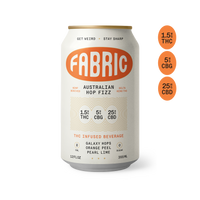 Rhythm
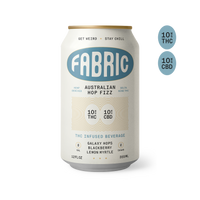 Downtime
 Afterhours
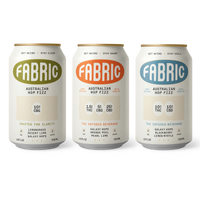 Anytime

Pick up almost any functional beverage on a grocery shelf right now, and you'll likely find the same cast of ingredients:
Lion's Mane, Cordyceps, ashwagandha, reishi, some combination of roots and mushrooms and botanical extracts, with a small-print disclaimer that the FDA hasn't evaluated any of it.
You’ll probably also see vague phrases like focus, calm, clarity, and energy. The functional beverage category has built a very convincing story around ingredients that, in most cases, can't deliver what the packaging implies. This isn’t because the science is fake, but rather that it requires something a single dose can’t physically provide.
We know this because we learned firsthand.
FABRIC first launched a version of Zero with Lion's Mane, Cordyceps, and L-theanine. We consulted experts, used nano-encapsulation for better bioavailability, and hit what looked like a clinical dose on paper.
When we did deeper research, we realized that we'd bought into a bit of wishful thinking. We initially produced around 8,000 cans that we couldn't honestly stand behind, so we took the experience as a lesson and reformulated.
Zero now contains 150mg of L-theanine, trace electrolytes, and magnesium chloride; that’s it. We reformulated, stripped the formula back, and replaced the noise with ingredients that have proven benefits in beverage form.

"Adaptogens": WTF Does It Even Mean?
Walk into any grocery store, and you'll find beverages claiming to be “adaptogenic,” with ingredient lists full of lemon balm, elderflower, ginger, yuzu, and rhubarb root. That said, none of those things are truly adaptogens.
The term was coined to describe compounds that help the body adapt to stressors, and adaptation, by definition, doesn't happen immediately. The original criteria require that an adaptogen be non-toxic, produce a broad and non-specific effect, and increase resistance to a range of stressors.
The operative phrase there is over time. Adaptogens are studied at consistent, daily, clinical doses over weeks or months. They were never designed to deliver results after consuming one dose.
Somewhere along the way, "adaptogen" became a buzzword for healthy, because it sounds scientific. Brands leaned in. The category followed.
This is exactly the problem Zero was built to solve.
The Lion's Mane Problem
The research on this ingredient is genuinely interesting: When taken in clinical doses (in one instance, 750mg of powder per day) over weeks to months, Lion's Mane (a mushroom that stimulates nerve growth factor (NGF) production) shows real promise for cognitive support.
One 16-week double-blind trial in older adults with mild cognitive impairment found meaningful improvements on cognitive assessment versus placebo. Longer-term trials in early Alzheimer's disease have shown similar signals. Long-term use of Lion's Mane has legitimate effects. No one is arguing that.
However, all of these trials and studies used an amount of Lion’s Mane significantly higher than what tastes good in a sparkling beverage.
When FABRIC originally formulated Zero, we included 2,000mg of nano-encapsulated Lion's Mane. That sounds like a lot, until you realize that the measurements refer to the weight of fresh mushrooms. Once those mushrooms are dried and processed, what actually ends up in the can is closer to a dusting.
But even if we'd managed to get a true clinical dose of closer to 3 full grams into the can (which would have been nearly impossible at a mass-market price point due to cost, taste, and ingredient stability), there's a second, bigger problem.
A 2025 double-blind, randomized, placebo-controlled crossover trial (the most relevant human study to date on RTD beverage formats) gave participants a 250mL drink containing 3g of concentrated Lion's Mane fruiting-body extract and measured cognitive and mood outcomes at 90 minutes.
The result: no significant improvement in global cognition or overall mood versus placebo.
That's not a knock on Lion's Mane. It’s just evidence that the ingredient works best when taken daily over long periods of time in its purest, powdered form.
The Ingredient That Earned Its Place In Zero: L-theanine
L-theanine is an amino acid that occurs naturally in tea leaves. It's the reason a cup of green tea feels different from a cup of coffee; still focused, but not so jittery. Chances are, you've experienced its effects more times than you know!
Unlike adaptogens, L-theanine works fast. Within 30 to 45 minutes of a single dose, it measurably increases alpha brain wave activity in the 8–14 Hz range, the same brain wave activity commonly associated with meditation or a focused flow state.
Multiple randomized controlled trials have confirmed short-term improvements in attention and working memory accuracy at doses of 100–200mg. One review found that single 200mg doses were associated with reductions in stress and anxiety under acute stress conditions.

It's also water-soluble, heat-stable, basically tasteless, and inexpensive enough to actually dose correctly in beverage format. Formulators love it, but marketers haven’t caught on quite yet.
Even though the clinical threshold most researchers point to is 100–200mg per serving, most functional beverages on the market sit at only 25–50mg. But FABRIC Zero contains 150mg: a dose intentionally chosen for effects consumers can notice within a single serving.
What We Put in Our Cans (And Why)
Zero's full formula is short and sweet:
-
L-theanine at 150mg: Approximately three times the industry average. Acute, clinically supported, and noticeable in a single serving.
-
Trace Magnesium: Though magnesium occurs naturally in the body, most of us are running low on it without even realizing. It’s depleted by stress, caffeine, and exercise, and it plays a direct role in muscle relaxation and sleep quality. Magnesium chloride is a form that’s well-suited to beverages, and is easier on the stomach than others.
-
Trace electrolytes: Naturally occurring in the body, and commonly lost through sweat and stress. Included for hydration support.
We believe in functional honesty. In short, no ingredients that require a biochemistry degree to evaluate. If you can't feel the benefit with one serving, it doesn't belong in the can.
Why Do You Care?
FABRIC is a Public Benefit Corporation (and pending B-Corp), a legal structure that holds us accountable to more than quarterly margins.
Our mission, to put it simply, is to make products that are actually good for the people drinking them, and to be upfront with those people about what's in the can and why.
When we realized the original Zero formula didn't clear our own bar, we went back to the drawing board. That's just part of building something worth building: you iterate until it’s right, and you’re open about where you are in the process.


